
Kombucha is an acidic fermented beverage made from tea, sugar, and SCOBY . As kombucha production continues to expand into commercial-scale manufacturing, mold contamination has become an important issue that producers need to consider.
For kombucha manufacturers, mold contamination can affect the color, aroma, and flavor of the product and may also result in the disposal of an entire batch and the associated SCOBY culture. Reducing the risk of mold contamination is therefore an important consideration when designing production processes and quality control systems.
Commercial kombucha production requires effective control of raw materials, cultures, equipment, the production environment, and fermentation conditions to reduce the risk of mold contamination.
What Is Mold Contamination in Kombucha?
Kombucha fermentation relies on the combined activity of microorganisms such as yeast and acetic acid bacteria. A normal SCOBY is typically white, beige, light brown, or translucent, with a gelatinous texture, and may develop new cellulose layers during fermentation.
If the surface of a SCOBY develops obvious fuzzy, powdery, or dry patches accompanied by unusual colors such as green, blue, gray, brown, or black, mold contamination may be present.
In commercial production, suspected mold contamination should be isolated promptly and handled according to applicable food safety procedures. Simply removing the visible mold and continuing to use the SCOBY is not recommended, as this may increase the risk of contamination spreading and creating a food safety issue.
Relevant food safety guidance generally recommends that SCOBYs showing obvious mold contamination should not be reused as starter cultures for subsequent batches.

Why Does Mold Occur During Kombucha Production?
Although commercial kombucha production generally involves more comprehensive equipment and sanitation controls, the risk of mold contamination can increase as production volumes grow. Inadequate hygiene control of raw materials, equipment, air, personnel, or production processes can all contribute to contamination.
1. Contaminated SCOBY
The SCOBY is a key culture used in kombucha fermentation. If a contaminated SCOBY or starter liquid is introduced into the process, mold may enter the fermentation tank and potentially spread through multiple production batches.
Manufacturers should therefore establish proper culture storage and handling procedures. Before inoculation, the culture should be checked for appearance, aroma, pH, and, where necessary, relevant microbiological indicators to prevent abnormal cultures from entering the production system.
2. Contaminated Raw Materials
Tea, sugar, water, and flavoring ingredients such as fruit juice, fruit puree, and herbs can all introduce microorganisms into the production process.
Commercial producers should strengthen supplier qualification and raw material inspection while controlling storage conditions and relevant microbiological specifications. Process water should meet applicable food production water requirements. Appropriate heat treatment can also be used to reduce the microbial load of certain ingredients before cooling and inoculation.
3. Inadequate Equipment Cleaning
Fermentation tanks, storage tanks, pipelines, valves, pumps, and filling equipment can become potential sources of microbial contamination if they are not cleaned and sanitized properly. Residual tea, organic matter, or product from a previous batch may provide conditions for microorganisms to grow.
Commercial kombucha production should therefore establish standardized CIP (Clean-in-Place) cleaning and sanitation procedures and regularly verify cleaning effectiveness.
4. Poor Environmental Control
Kombucha fermentation may require a certain degree of air exposure, so simply relying on a completely closed system is not always sufficient to address contamination risks.
Commercial producers should maintain good hygiene in fermentation areas and minimize potential contamination sources such as dust, unnecessary personnel movement, cross-contamination, and pests.
For open or semi-open fermentation systems, appropriate protective measures should also be implemented to reduce the entry of airborne dust and mold spores into the fermentation liquid.
PH Control: An Important Monitoring Parameter in Kombucha Fermentation
pH is an important control parameter in commercial kombucha production. During fermentation, yeast and acetic acid bacteria metabolize sugars and produce organic acids, causing the pH to gradually decrease. Appropriate acidity can help inhibit the growth of certain undesirable microorganisms.
Commercial producers should therefore use a calibrated pH meter to monitor and record fermentation conditions rather than relying solely on fermentation time to determine the endpoint.
Some food safety guidance recommends that kombucha reach a pH of 4.2 or lower during fermentation. However, the specific control range should be determined based on the product formulation, process validation, and applicable local regulations.
At the same time, excessive acidification should be avoided in order to maintain the desired flavor and overall product quality.
Control Fermentation Temperature and Time
Fermentation temperature and time directly affect the growth and metabolic activity of yeast, acetic acid bacteria, and other microorganisms.
Commercial kombucha producers should establish appropriate fermentation temperatures and times based on the SCOBY culture, formulation, and product requirements. Fermentation tanks equipped with temperature monitoring and control systems can help maintain stable fermentation conditions and improve batch-to-batch consistency.
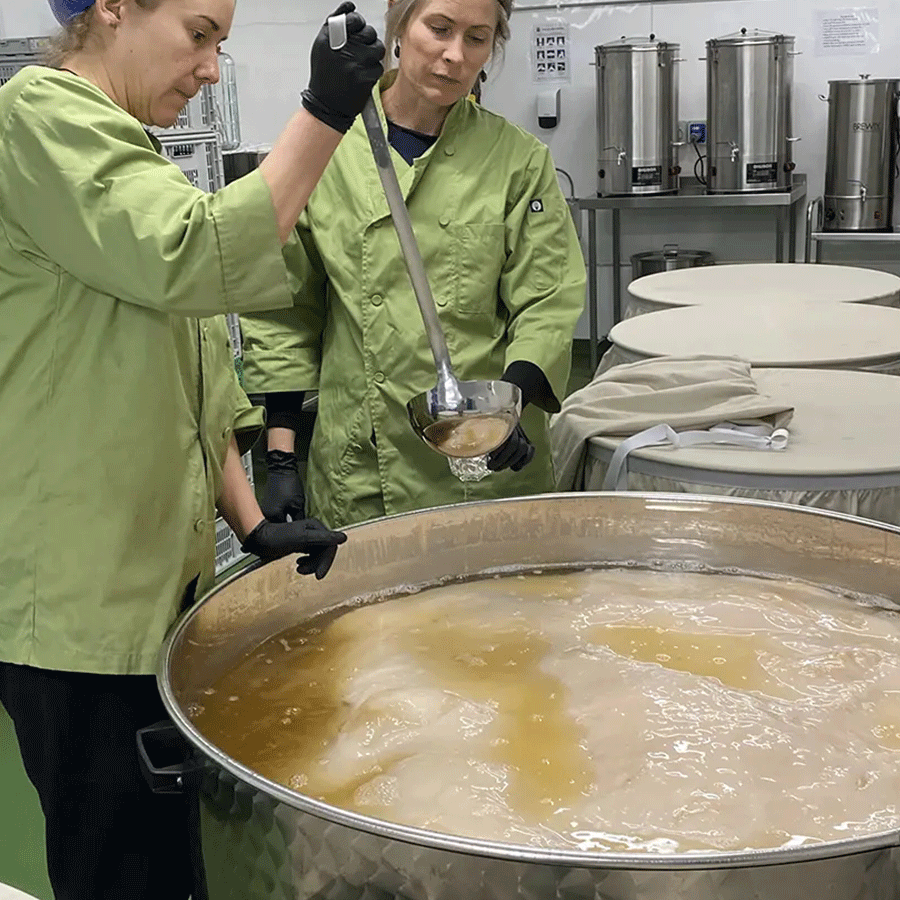
What Should You Do If Mold Is Found in Kombucha?
If suspected mold is discovered during commercial production, the affected batch should be immediately isolated and production related to the contamination should be suspended. Simply removing visible mold and continuing to use or sell the affected product is not recommended.
The company should follow its food safety procedures to investigate the potential source of contamination, including the starter culture, raw materials, equipment, and production environment. Proper cleaning and sanitation should be carried out, and batch traceability records should be reviewed.
Where necessary, contaminated products should be disposed of according to applicable procedures. A root-cause investigation and corrective actions should also be completed to prevent the contamination from recurring.
Mold control in commercial kombucha production needs to cover the entire production process, including raw materials, starter cultures, equipment, fermentation, and filling.
Proper sanitation, hygienic equipment, standardized CIP procedures, stable fermentation conditions, and regular pH monitoring can help reduce the risk of mold contamination.
For kombucha manufacturers, appropriate equipment design and standardized production processes provide an important foundation for product consistency and food safety. Companies should also establish a comprehensive food safety management system based on their specific products, production processes, and target-market requirements.